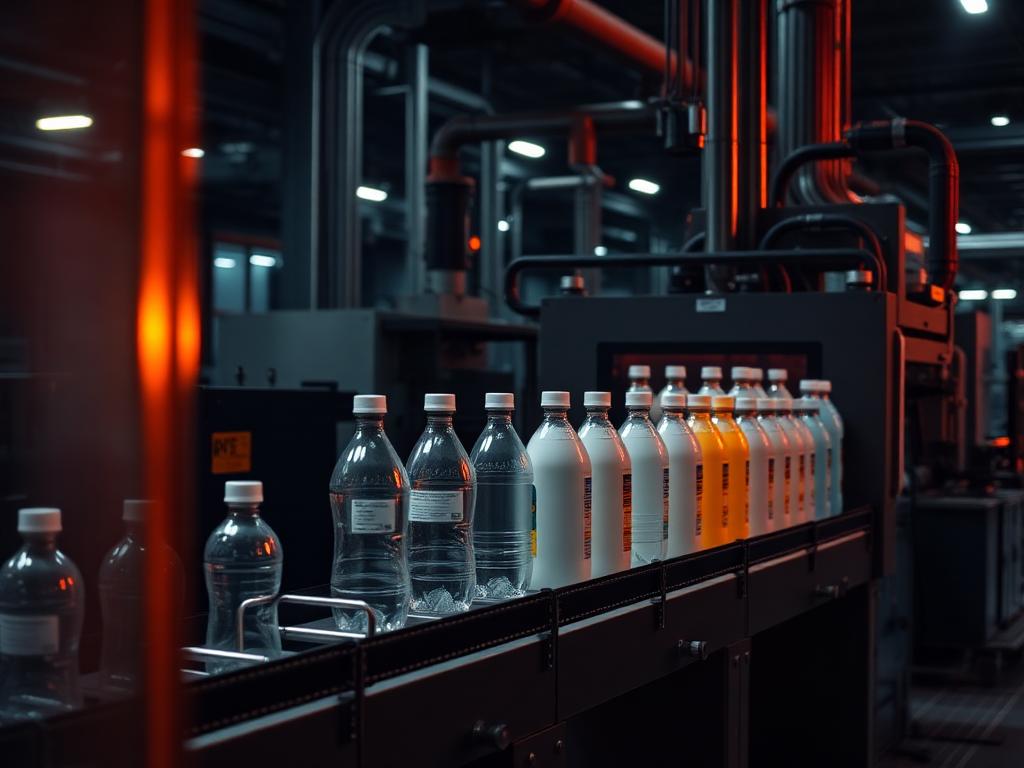
Blow Molding
Extrusion Blow Molding: From 1 to 120 Liters
Our extrusion blow molding line covers hollow parts from 1 to 120 liters: from battery boxes to industrial containers, jerrycans and technical tanks. Every liquid-carrying part ships after in-line leak testing.
Technical Scope
EBM and the 1-120 L Position
1-120 L
The technical and industrial blow molding segment
In extrusion blow molding (EBM), an extruded parison is inflated inside the mold; hollow, high-volume parts take shape in a single operation. Our 1-120 liter range sits squarely in this process's home ground: the technical and industrial blow molding segment.
An honest boundary line: precision-neck bottles below 1 liter (pharma and cosmetic miniatures) belong to injection blow molding (IBM) and are outside our scope. Our focus is where EBM is strongest: large-volume parts that demand wall thickness control and structural performance.
Product Families
Product Families
Battery boxes and lids
Automotive battery boxes, lids and accessories; traction battery components. Our quality management system, certified to IATF 16949, carries the supply discipline for this product family.
Industrial containers and jerrycans
Bottles and containers for the agriculture, agrochemical and paint sectors; transport containers and jerrycan class packaging.
Technical hollow parts
Tanks, ducts and reservoir class parts, including tanks with translucent level indicators.
Home appliance components
Blow molded hollow components for appliance manufacturers.
Food and Personal Care
Food and personal care packaging
We have production experience in food, personal care and chemical packaging from 1 liter upward; your product's certification requirements are clarified together at the RFQ stage.
Answering the Buyer's Questions
Wall Thickness and Weight Control
Blow molding buyers ask two classic questions: is the wall thick enough everywhere, and is the part weight consistent batch to batch? Both are answered at process setup:
01
Wall thickness distribution
Parison control defines the thickness distribution during process setup; thinning risk in critical zones (corners, base, handle) is verified at the sampling stage.
02
Weight consistency
Part weight is monitored through serial production; a stable gram weight protects both structural performance and unit material cost.
03
Leak tightness
Every liquid-carrying part class goes through in-line leak testing; leaks are caught on the line, not in the field.
Value Added
Value-Added Operations
Your blow molded part leaves the line finished, not just molded: logo printing, translucent level indicators, ultrasonic welding, hot plate welding, kitting and assembly, cap and closure supply. The goal is always the same: leave no operation on your line.
Materials
Materials
Polymers processed on the blow molding line: HDPE, LDPE, PP. Material selection is recommended at the RFQ stage based on chemical resistance, impact strength and target gram weight.
One Chain of Accountability
Where It Sits in the Chain
Your blow mold is designed and built in the group's in-house mold shop (KAMAS); revisions never leave the roof. Your blow molded body, your injection molded caps and brackets (90-1100 t clamping force range) and your extruded profiles come together under one roof, then ship as an assembled, tested component. One partner, one chain of accountability.
RFQ
Upload your 3D data or technical drawing; get a manufacturability assessment and a quote from our engineering team, built around your liter, weight and leak-tightness requirements. New tool or tool transfer, the review starts from the same form.